
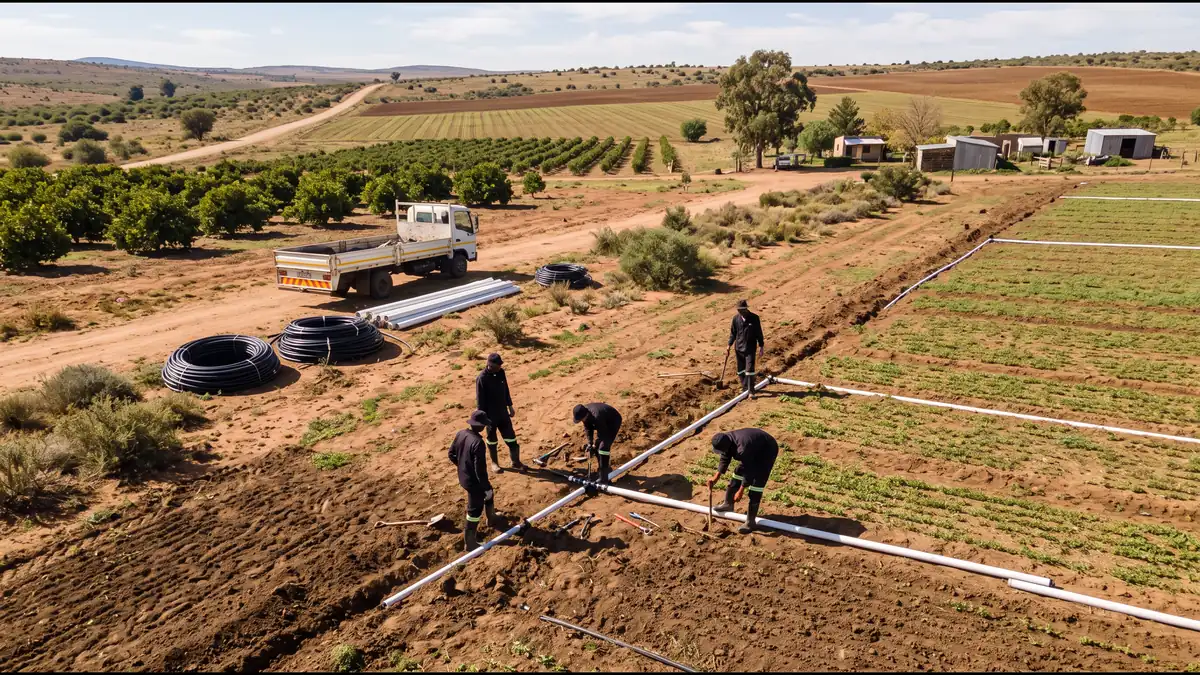
Subsurface Drip Irrigation places drip lines below the soil surface so water goes straight to the root zone and the surface stays drier. Send your details once and independent drip installers that may cover your area reply with prices.
Send your crop, hectares, soil type and water source to get subsurface drip quotes.
Get the Best QuoteWhat Subsurface Drip Irrigation Includes
- Buried laterals. Thick-walled drip line or tape installed by a shank or injection toolbar at a set depth.
- Emitters. Pressure-compensating or anti-siphon drippers, often with root-intrusion protection.
- Headworks. Filtration, fertigation and pressure regulation at the block inlet.
- Flush manifolds. Pipe joining the ends of the laterals so each block can be flushed.
- Air and vacuum valves. Stop soil being sucked into emitters when the system drains.
Who It Suits
Row crops, sugarcane, lucerne and other long-term crops where lines can stay in the ground for several seasons. It suits farms that want to work, graze or harvest without moving surface lines, and fields where wind or a dry surface is a concern.
Design Choices
- Depth. Shallower for crops that need help germinating, deeper for long-term crops and where tillage is done. Depth must suit your soil and implements.
- Lateral spacing. Usually one line per row or per bed, set by crop rows and how water spreads in your soil.
- Root intrusion. Emitters with built-in protection, regular irrigation and correct chemical treatment help keep roots out.
- Rodents and insects. Burrowing animals can chew lines, so ask about thicker walls and how damage is found and repaired.
- Germination. On sandy soils it can be hard to wet the surface for seed, so plan for a sprinkler or other method at establishment.
How the Job Runs
- Assessment. The installer checks soil, slope, crop layout, water quality and the source.
- Design. Depth, spacing, emitter flow, block sizes and filtration are set.
- Headworks and mainlines. Filters, valves, fertigation and submains are installed.
- Lateral installation. Lines are buried with a toolbar and joined to supply and flush manifolds.
- Testing. The system is flushed, pressures checked at the ends and leaks repaired before planting.
Subsurface Drip Irrigation Prices
Ballpark prices so you can sanity-check a quotation.
| Item | Ballpark price |
|---|---|
| Subsurface drip, infield equipment, per ha | R30,000 - R65,000 |
| Subsurface drip, infield, per ha (older SASRI figure) | ~R26,000 |
| Subsurface drip annual maintenance, per ha (older figure) | R780 - R880 |
| Drip annual electricity, per ha (older tariffs) | ~R4,750 |
| Automatic backflush disc filter bank | R40,000 - R250,000 |
| Venturi injector for chemical and fertiliser dosing | R1,500 - R6,000 |
Prices JUST UPDATED. Ballpark figures, rounded, excluding VAT unless stated. They are compiled from published South African cost estimates and typical supplier and contractor rates. They are not our prices or quotations, and no contractor is bound by them. Unless a row says otherwise they exclude the water source, power supply and earthworks, so confirm exactly what each quotation includes.
Sources:
- SASRI - irrigation cost estimates
- Typical South African supplier and contractor rates
Get prices for your farm rather than a range. Send one request and compare replies.
Get the Best QuoteWhat Affects the Price
- Wall thickness. Heavier lines last longer but cost more.
- Lateral spacing. Closer spacing means more metres of line per hectare.
- Filtration. SDI needs good filtration, which adds to headworks cost.
- Soil conditions. Stony or hard soils slow installation.
- Block size. Larger blocks spread headworks cost over more hectares.
Maintenance
Flush laterals regularly through the flush manifolds, keep filters clean and treat lines with acid or chlorine where water quality calls for it. Check end pressures each season and walk the field for wet spots that show leaks or rodent damage.
Subsurface Drip Irrigation FAQs
How deep is subsurface drip installed?
It depends on crop, soil and tillage. Your installer should set the depth based on root zone and the implements you use.
How do I stop roots blocking emitters?
Use emitters with root-intrusion protection, avoid long dry spells and follow a chemical treatment programme recommended by the installer or supplier.
Can I find leaks in buried lines?
Wet spots on the surface, lower end pressure or a rise in flow show leaks. Lines can be dug up and joined with repair couplings.
How is SDI different from surface drip?
Surface drip lies on the soil and is easy to inspect and move. SDI stays buried, keeps the surface drier and suits long-term crops, but needs more careful filtration and flushing.
Related Services
Request subsurface drip quotes through Agricultural Irrigation South Africa and compare the line type, depth and filtration each installer proposes.
Agricultural Irrigation South Africa is a quote-comparison service. We do not design, supply, install or repair irrigation systems, and we do not employ contractors. Work is quoted and carried out by independent irrigation businesses, and your contract is with the business you choose. Ask each one for a written quotation that names the equipment, design flows and pressures, preparation, timing and any warranty terms before you pay a deposit.
Subsurface Drip Irrigation. Describe your irrigation job once and compare replies from independent contractors.
Get the Best QuoteGet the Best Quote, Fast
Client Reviews
Powered by leaderr